
We are syndicating this article from Packaging Insights.
Key takeaways
- Identiv has expanded its ID-Tiny portfolio with ultra-miniaturized HF/NFC inlays and tags designed for compact and design-sensitive products.
- The technology enables smartphone-readable functions such as authentication, Digital Product Passport support, product tracking, consumer engagement, and lifecycle visibility.
- Applications span luxury goods, beauty, health care, pharmaceuticals, and F&B.
Identiv, a RFID- and Bluetooth low energy-enabled Internet of Things (IoT) solutions provider, has expanded its ID-Tiny product family, a portfolio of ultra-miniaturized High Frequency (HF) or Near Field Communication (NFC) inlays and tags engineered to bring secure digital intelligence to compact products, small components, and high-value items where space is extremely limited.
The company says its new solution aims to enable the connection for physical objects that have “historically been too small, too design-sensitive, or too irregularly shaped for conventional RFID and HF/NFC deployments.” It can be applied to jewelry, eyewear, surgical instruments, pharmaceutical vials, wireless earbuds, and personal care product caps.
ID-Tiny allows brands and manufacturers to add secure digital functionality without having to redesign the product, notes Identiv.
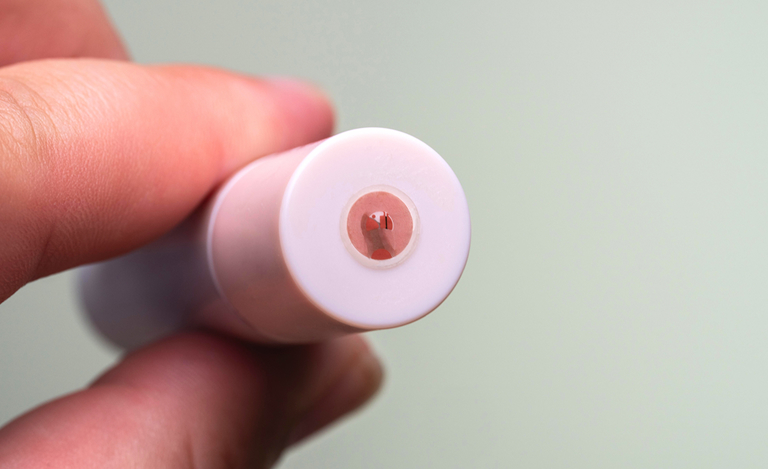
Ashley Burkle, director of sales and business development at Identiv, tells Packaging Insights: “Miniaturization removes the constraint that’s kept a lot of everyday products out of the connected packaging conversation. Most conventional RFID and NFC tags simply couldn’t fit on a lip balm cap, a small glass bottle, or a compact jar without changing how the product looked or was manufactured.”
“Once the tag can be smaller than a pencil eraser, that’s no longer the limiting factor, and brands can add a smartphone-readable identity to products that were previously too small or too design-sensitive to support it.”
Adding digital identities
ID-Tiny is designed to turn compact products into verifiable touchpoints that support authenticity checks, usage tracking, tap-to-pair experiences, patient engagement, and lifecycle visibility.
“The antenna designs are optimized to maintain strong, consistent read reliability even at this scale, which is what makes it viable for categories like F&B, beauty, and personal care, where packaging shapes and materials vary widely,” says Burkle.
Identiv highlights that the solution can assist luxury goods and fashion brands with discreet digital certificates of authenticity, Digital Product Passport compliance, extended warranty registration, insurance activation, ownership verification, and protection against counterfeiting and gray market diversion.
In health care, ID-Tiny can support surgical instrument tracking, sterilization cycle monitoring, medical consumable authentication, pharmaceutical vial tracking, and patient-facing digital instructions.
“For consumers, the benefit is that access to product information stops requiring any extra step. A consumer taps their phone to a label or cap and gets the same product information a brand might otherwise bury on a website: ingredient sourcing, usage instructions, authenticity confirmation, or how to properly dispose of or recycle the packaging,” Burkle explains.
“Since the tag lives on the product itself rather than on a swing tag or insert that gets thrown away, that access travels with the product for its entire life, not just at the point of sale.”
Connecting small products
Burkle underscores that the solution opens up smart labeling to product categories that don’t have much surface area to work with.
“Ultra-miniaturized tags mean brands in these categories can now offer the same tap-to-verify, tap-to-learn experience that’s been more common in electronics or apparel, without redesigning the packaging around the technology.”
Dr. Manfred Mueller, chief strategy officer at Identiv, concludes: “When you can bring secure, smartphone-readable HF/NFC functionality into form factors no larger than a grain of rice, you unlock entirely new use cases without compromising performance. That is the power of miniaturization: it makes the smallest physical objects part of the digital world.”
This year, Xindeco IoT, an RFID tags manufacturer based in China, expanded its VersaTrack tag family with Gen2X support and unveiled two additional tags. The ultra-small tags were developed to extend inventory visibility into previously untaggable product categories.
At SEMICON 2025 Japan, Gyromatic Innovation presented its RFID electronic shelf, which supports advanced semiconductor packaging operations. Also at the show, Xedion showcased its logistic reusable box system that uses RFID technology to automatically reorder empty bins.