
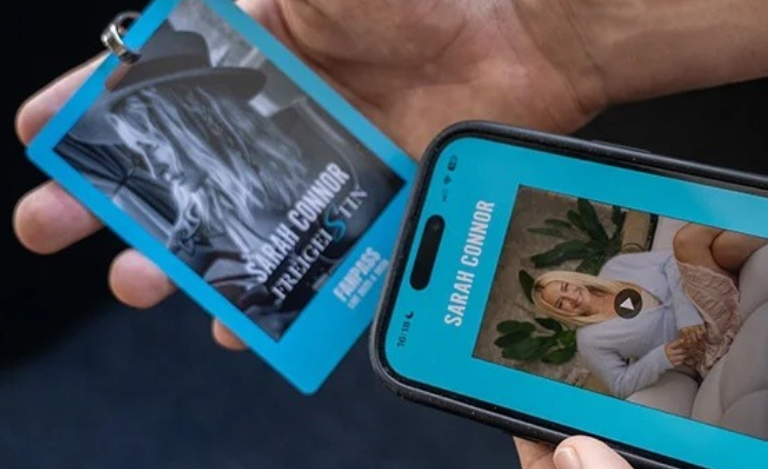
NFC technology is giving artists, athletes, and brands a way to turn the products people buy, wear and collect into direct channels for content, authentication, loyalty and continued engagement post-purchase.
We are syndicating this article from Total Retail.
By Klaus Simonmeyer at Identiv and David Geisser at ZATAP.
Merchandise has always been one of the most direct links between artists, sports teams and fans. A tour shirt, a limited-edition jersey drop, a collectible tied to a release — these objects hold the residue of a moment and give it physical form. For artists, merch has been one of the few consistent ways to translate attention into something owned. For fans, it offers a lasting connection to the artist beyond the performance itself.
The product is the thing the customer chose, paid for and kept. Yet in most cases, it remains disconnected from the next interaction the brand wants to create. There’s no built-in mechanism for the artist, athlete or brand to return to that object, to share something new, offer something exclusive, or understand how fans are engaging post-purchase. The relationship largely ends at the register.
NFC is changing that by giving physical products a secure digital identity. With the right experience layer behind it, the product itself can become the channel — one the fan already owns, already cares about, and doesn’t need to download anything to use. That creates new opportunities for artists, athletes and brands to deliver exclusive experiences tied directly to ownership of a specific product.
The Product as a Direct Fan Channel
The idea is simple on the surface: an NFC tag embedded in or applied to a physical product gives that item a unique digital identity. A tap of a smartphone to the NFC tag — no app, no account required — opens a digital experience connected to that specific object. What that experience contains is up to the artist or brand: a personal video message, exclusive content, a presale link, a poll, a community signup, early access to a future drop, a donation pathway. And critically, that experience can be updated after the product has already been sold.
That last point changes the value of the product. A fan who buys a T-shirt at a show and taps it that night sees one experience. The same fan, tapping the same shirt weeks later after receiving a push notification, can access something entirely new. The object becomes a point of return, not just a souvenir.
This closes a gap that has been difficult to address through other means. Social platforms introduce an algorithm between the creator and the fan. Email requires permission and competes for attention. Apps require a download most fans won’t make. A product the fan already chose to buy and keep is a more natural entry point than any of those. And the interaction it enables is direct, without a platform intermediary.
The results can be significant. In one example, NFC tags were added to an existing Ben Folds concert shirt after production, giving fans access to a digital experience supporting his Keys for Kids initiative. A tap opened a personal video from Folds, information about the initiative, and a direct donation pathway tied to the product. The shirt was re-released at a $10 premium over its original price and became the best-selling item in his store. For fans, the purchase offered a connection to the artist and his work that they could revisit through the shirt itself.
Why This is Different From a QR Code
QR codes have made physical-to-digital interactions familiar, and for many basic applications they’re enough. However, a QR code is primarily a pointer. It can send someone to a destination, but it doesn’t establish that the person scanning it is holding a specific, authentic product. The same code can be photographed, copied, shared or placed somewhere else entirely.
NFC gives the product its own credential. A tag encoded with a unique identity connects that specific physical item to a managed digital experience. Digital and mechanical security features built into the tag and its materials, including tamper-evident construction that makes the tag identity impossible to replicate, mean the object itself is the access point. That distinction becomes important when the experience is meant to be exclusive, tied to ownership, or gated to people who were actually present at an event.
The Engineering Behind a Reliable Tap
Getting NFC to perform reliably across different product types isn’t a given. A textile tag has to survive repeated washing and extended wear. A tag embedded in a collectible may need to conform to a small or curved surface without changing how the object looks or feels, or, in some cases, become part of the object’s intended design.
There’s no single tag design that works across every product and every condition. A tag that fails in the field — months after purchase, at the moment a fan tries to tap a product they still care about — undermines everything the digital connection was meant to create.
That’s why the hardware and platform layers have to be designed in coordination. The experience a fan or customer encounters depends on engineering decisions made well before the product reaches them.
A Model With Broader Implications
The creator economy has been a useful proving ground for connected product experiences because the value is easy to see: artists need direct relationships with fans, and fans already assign meaning to the physical objects they buy, wear and collect. But the same model applies well beyond music and merchandise.
The model is repeatable: give a physical product a secure digital identity, connect it to a platform that can manage the experience behind it, and make that experience updateable over the life of the product. For consumer brands, that can extend the value of a package beyond the shelf through provenance, authentication, replenishment or loyalty. For pharmaceutical and healthcare companies, it can support product integrity and traceability. For luxury goods, it can tie ownership, storytelling and resale confidence directly to the item itself.
The larger opportunity is that the interaction doesn’t have to stop at engagement. Once a product has a secure digital identity, it can become part of an end-to-end connected product infrastructure: linking the physical object to a digital experience, capturing product-level engagement, connecting that data into enterprise systems and helping trigger the next action. That might be a loyalty journey, a replenishment prompt, an authentication record, a service workflow, a product lifecycle update or a follow-up communication.
Purchasing a product is no longer the end of the journey. It becomes the beginning of a new way for brands to communicate with customers and extend the relationship — from the first tap to the next experience, interaction, or product drop.
Klaus Simonmeyer is vice president at Identiv, a global provider of RFID-, NFC- and Bluetooth Low Energy (BLE)-enabled Internet of Things (IoT) solutions.
David Geisser is the co-founder and CEO of ZATAP, a platform that connects physical products with digital experiences to help brands engage customers and fans.