
Identiv’s Ashley Burkle discusses how tamper evidence, NFC and connected technologies are giving brands new tools to combat counterfeiting and protect product integrity.
We are syndicating this article from Label & Narrow Web.
Counterfeiting, unauthorized distribution and increasingly complex supply chains are changing the role of labels and packaging in product protection. Physical tamper-evident features are now being combined with NFC, Bluetooth Low Energy (BLE) and other connected technologies to give brands greater visibility into product authenticity and integrity.
Label & Narrow Web recently spoke with Ashley Burkle, director of sales and business development at Identiv, about how these technologies are evolving, the role converters can play and where connected packaging goes next.
What factors are driving demand for packaging as a brand trust strategy, rather than just protection or presentation?
Brands are under growing pressure to prove that the product a customer receives is genuine, uncompromised, and consistent with what was promised. Counterfeit goods and unauthorized resale increasingly reach customers through channels brands cannot see or control. When those products fail, customers rarely separate the unauthorized seller from the name on the package. The brand is left to manage a flood of complaints and false warranty claims, while its reputation takes the hit for a product it never made or approved.
That pressure is turning packaging into an active proof point. Secure Near Field Communication (NFC) gives brands a direct channel for verified product information after the sale. More importantly, it extends authenticity beyond the shelf and into every interaction that follows, turning packaging into a lasting trust layer rather than a one-time container.
What role do label converters play in helping brands turn an authentication strategy into a scalable packaging solution?
Converters bring deep sector-specific expertise that shapes how an authentication solution is designed and scaled. This is particularly important in healthcare, where strict regulatory and quality requirements influence every packaging decision. Their understanding of those standards allows them to guide material selection and production in a way that supports both compliance and scale, helping brands move from a promising concept to a solution they can deploy with confidence.
How do physical tamper-evident features and digital NFC authentication work together to provide stronger proof of product integrity?
Physical tamper-evident features show whether a package has been opened or disturbed, while NFC strengthens that evidence by tying it to the secure identity of the specific product or container.
At Identiv, we developed the ID-Safe portfolio to bring these physical and digital layers together. Unlike seals or holograms, which can be copied and difficult to verify by eye alone, a uniquely encoded NFC tag allows a brand, retailer, or consumer to authenticate the exact item with a smartphone tap. If the package is opened or interfered with, the recorded tamper event gives brands actionable signals to investigate and isolate affected inventory.
Bluetooth Low Energy (BLE) additionally allows brands to layer temperature and location tracking in transit on top of tamper evidence and NFC authentication. For temperature-sensitive products in industries like pharmaceuticals and food and beverage, BLE smart labels can monitor cold-chain conditions and flag threats to product integrity.
The result is a stronger chain of evidence across the product lifecycle. Brands gain real-time visibility into tampering and product status, making it harder for compromised goods to re-enter the supply chain undetected. Together, the technologies function as physical and digital layers that turn packaging into a more reliable source of traceability.
How should brands measure the return on investment of connected packaging beyond reducing counterfeit activity?
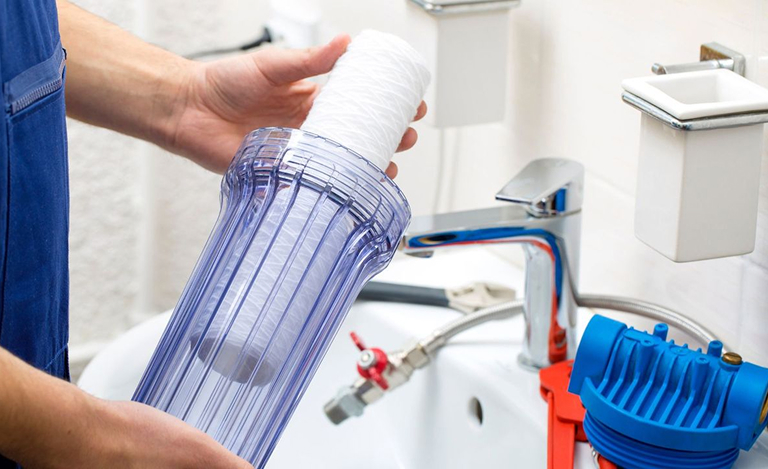
One of the clearest places to see ROI beyond counterfeit reduction is smart-home consumables – refrigerator water filters, HVAC cartridges, fragrance pods, printer ink – where replacement is built into the product lifecycle and every tap is a trackable moment rather than a one-time sale.
From there, the most meaningful numbers are often the actions that follow a tap: reorder rate, enrollment in a replenishment or service program, and retention over time versus customers buying through unverified channels. Where tags include sensing features, brands can also track installation-confirmation and leak-flag data as an early read on product performance, before it turns into a support call or a warranty claim.
Trust and safety belong in the return as well. The Association of Home Appliance Manufacturers (AHAM) has noted that counterfeit refrigerator filters, for example, can be difficult even for experts to identify. Independent testing has also shown that some failed to remove contaminants such as lead, while poorly fitting replacements could cause leaks and property damage. Brands can measure that side of ROI directly too – connected smart-home consumables leading to fewer counterfeit-driven warranty claims and support tickets – as a trackable offset against the cost of authentication.
Looking ahead, how do you expect connected packaging to reshape the role of packaging partners over the next five years?
Over the next five years, I think rising consumer expectations will drive a fundamental shift in how packaging partners define performance; not only how a package functions on the shelf, but what it enables after the sale.
Consumers will expect a tap to not only confirm that a product is genuine but deliver something useful, whether that is support, ownership services, or a more personalized brand experience. At the same time, BLE smart labels will expand the value of connected packaging before the point of sale by monitoring temperature, humidity, and location across the supply chain.
That move will bring packaging partners closer to brand strategy by making them responsible for translating the physical package into a trusted digital experience that can deepen throughout the product lifecycle. I think the biggest opportunity will be helping brands make every package feel less like the end of the transaction and more like the beginning of an ongoing relationship.